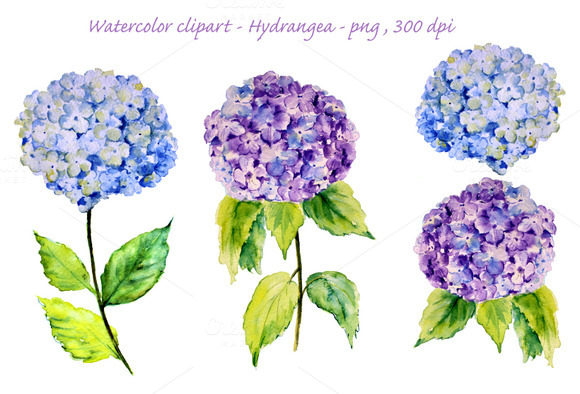
Hydrangea (/ha?'dre?nd?i?/;common labels hydrangea or hortensia) is a genus of 70-75 species of flowering plant life indigenous to southern and eastern Asia (China, Japan, Korea, the Himalayas, and Indonesia) and the Americas. Probably the greatest kinds diversity is within eastern Asia, china notably, Japan, and Korea. Most are shrubs 1 to 3 meters tall, however, many are small trees and shrubs, while others lianas getting up to 30 m (98 feet) by climbing up trees and shrubs. They could be either deciduous or evergreen, although cultivated temperate varieties are deciduous generally.Having been introduced to the Azores, H. macrophylla is currently very common, on Faial particularly, which is known as the "blue island" because of the multitude of hydrangeas present on the island.Life cycleHydrangea plants are produced from planting season to late fall months; they increase in flowerheads (corymbs or panicles) most often at the ends of the stems.
Usually the flowerheads contain two types of flowers: small non-showy blooms in the guts or interior of the flowerhead, and large, showy blossoms with large multi-colored sepals (tepals). These showy blossoms are long in a band often, or to the surface of the tiny flowers. Crops in wild populations have few to none of the showy blossoms typically, while cultivated hydrangeas have been bred and selected to have significantly more of the bigger type flowers.There are two flower arrangements in hydrangeas with Corymb style inflorescens, which include the commonly grown "bigleaf hydrangea"--Hydrangea macrophylla. Mophead blossoms are large round flowerheads resembling pom-poms or, as the name implies, the relative brain of any mop. In contrast, lacecap flowers bear round, flat flowerheads with a center core of subdued, small flowers surrounded by outer rings of larger flowers having showy sepals or tepals.
The blossoms of some rhododendrons and viburnums can seem, at first glance, comparable to those of some hydrangeas.Colors and ground acidityIn most species the flowers are white, however in some kinds (notably H. macrophylla), can be blue, red, red, light crimson, or dark crimson. In these species the colour is damaged by the occurrence of metal ions which are available or tied up depending upon the soil pH. For H. macrophylla and H. serrata cultivars, the flower color can be dependant on the relative acidity of the soil: an acidic soil (pH below 7), will have available aluminum ions and produce flowers that are blue to purple typically, whereas an alkaline soil (pH above 7) will tie up aluminum ions and lead to pink or red flowers.
This is the effect of a color change of the rose pigments in the presence of aluminium ions which may be taken up into hyperaccumulating crops.[6] Lowering the pH of potting soils or mixes usually does not change the blossom color to blue, because these soils have no aluminum ions. The ability to blue or green a hydrangea is also affected by the cultivar. Some plants are selected for their ability to be blued, while some are bred and selected to be red, pink or white. The flower color of most other Hydrangea species is not influenced by aluminum and can't be changed or shifted. Hydrangeas also have a nickname called 'Change Rose'.
purple hydrangea Hydrangea Pinterest

Large hydrangeas Purple and lavender Flowers Pinterest

purple hydrangea

hydrangea 2 purple hydrangea 2 2 hydrangea 11 purple hydrangea 021


 Hydrangea (/haɪˈdreɪndʒiə/;common names hydrangea or hortensia) is a genus of 70–75 species of flowering plants native to southern and eastern Asia (China, Japan, Korea, the Himalayas, and Indonesia) and the Americas. By far the greatest species diversity is in eastern Asia, notably China, Japan, and Korea. Most are shrubs 1 to 3 meters tall, but some are small trees, and others lianas reaching up to 30 m (98 ft) by climbing up trees. They can be either deciduous or evergreen, though the widely cultivated temperate species are all deciduous.Having been introduced to the Azores, H. macrophylla is now very common, particularly on Faial, which is known as the "blue island" due to the vast number of hydrangeas present on the island.Life cycleHydrangea flowers are produced from early spring to late autumn; they grow in flowerheads (corymbs or panicles) most often at the ends of the stems. Typically the flowerheads contain two types of flowers: small non-showy flowers in the center or interior of the flowerhead, and large, showy flowers with large colorful sepals (tepals). These showy flowers are often extended in a ring, or to the exterior of the small flowers. Plants in wild populations typically have few to none of the showy flowers, while cultivated hydrangeas have been bred and selected to have more of the larger type flowers.There are two flower arrangements in hydrangeas with Corymb style inflorescens, which includes the commonly grown "bigleaf hydrangea"—Hydrangea macrophylla. Mophead flowers are large round flowerheads resembling pom-poms or, as the name implies, the head of a mop. In contrast, lacecap flowers bear round, flat flowerheads with a center core of subdued, small flowers surrounded by outer rings of larger flowers having showy sepals or tepals. The flowers of some rhododendrons and viburnums can appear, at first glance, similar to those of some hydrangeas.Colors and soil acidityIn most species the flowers are white, but in some species (notably H. macrophylla), can be blue, red, pink, light purple, or dark purple. In these species the color is affected by the presence of aluminum ions which are available or tied up depending upon the soil pH. For H. macrophylla and H. serrata cultivars, the flower color can be determined by the relative acidity of the soil: an acidic soil (pH below 7), will have available aluminum ions and typically produce flowers that are blue to purple, whereas an alkaline soil (pH above 7) will tie up aluminum ions and result in pink or red flowers. This is caused by a color change of the flower pigments in the presence of aluminium ions which can be taken up into hyperaccumulating plants.[6] Lowering the pH of potting soils or mixes usually does not change the flower color to blue, because these soils have no aluminum ions. The ability to blue or pink a hydrangea is also influenced by the cultivar. Some plants are selected for their ability to be blued, while others are bred and selected to be red, pink or white. The flower color of most other Hydrangea species is not affected by aluminum and cannot be changed or shifted. Hydrangeas also have a nickname called 'Change Rose'.